
Powering Up Your Team: How to Leverage the Strengths of All Four Generations in the Workplace
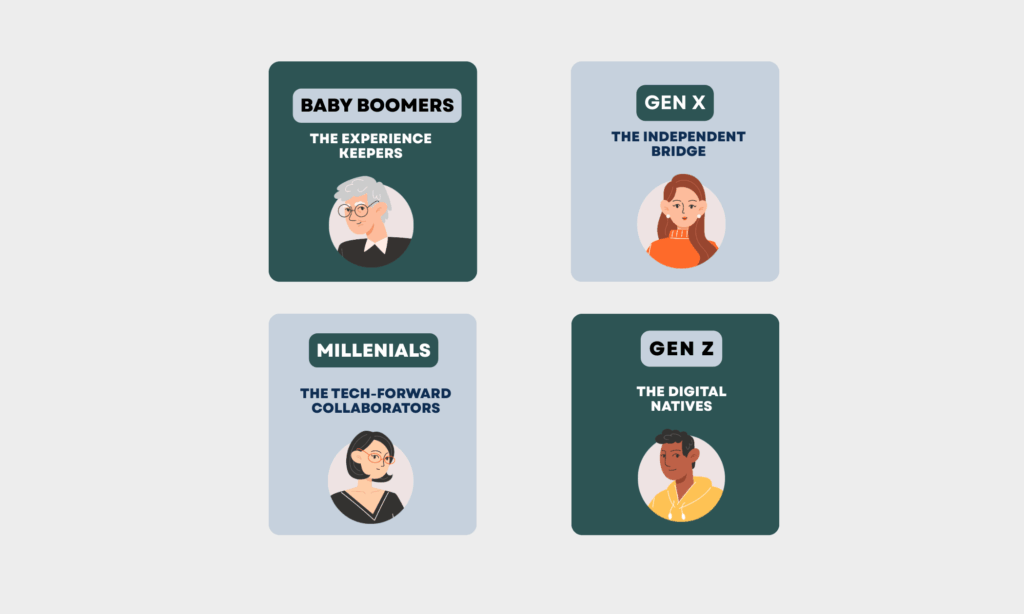
The modern workplace is a dynamic blend of unique skills, values, and experiences, shaped by four distinct generations. Organizational success doesn’t hinge on simply managing these differences, but on leveraging them. By recognizing and integrating the specific strengths of Baby Boomers, Gen X, Millennials, and Gen Z, you can boost innovation and foster better collaboration.
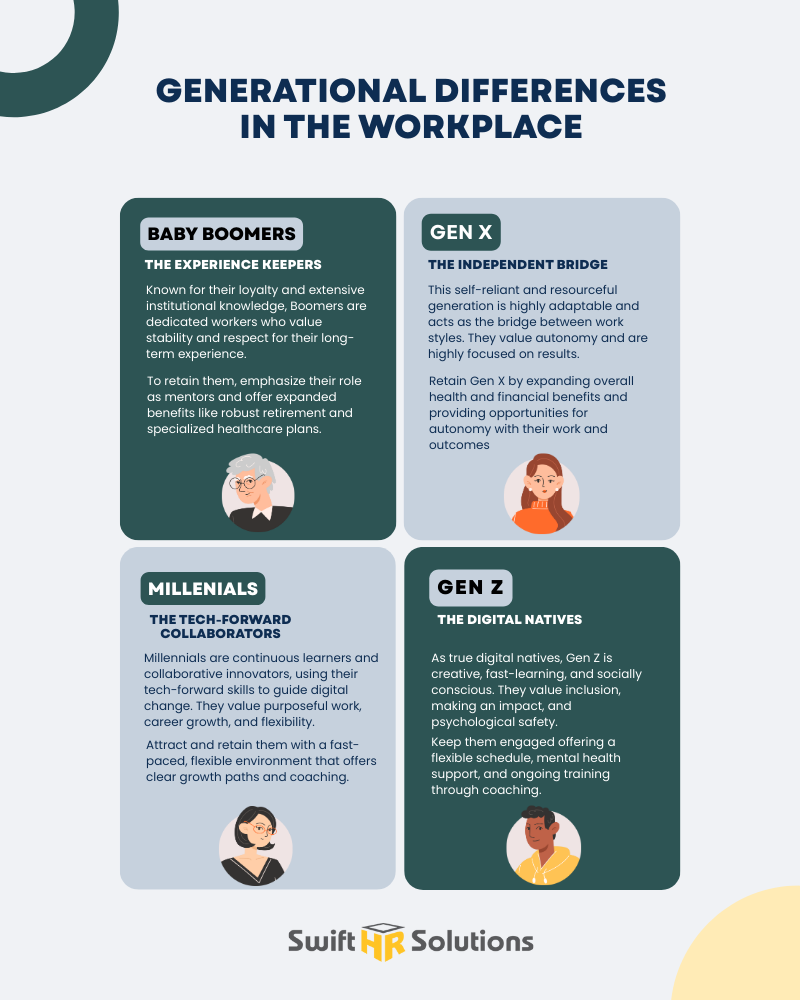
Baby Boomers: The Experience Keepers
Core Strengths: Boomers are essential for institutional knowledge, dedication, and loyalty. They view long hours as a sign of dedication and are highly goal-oriented, valuing achievement and success. While they may initially seem hesitant about new tech, they adapt when they see the benefits for efficiency.
Key Communication & Feedback Styles:
Preferred Channel: They favor face-to-face meetings and structured phone calls or email. They appreciate formal recognition and directness.
Work Values: They prioritize hard work and view their jobs as a source of personal fulfillment. They equate authority with experience and value stability.
Keys to Retention:
Emphasize their crucial role as mentors to younger staff.
Offer expanded benefits that match their needs, such as robust retirement plans and specialized healthcare. Provide learning opportunities to help them bridge any technology gap.
Gen X: The Independent Bridge
Core Strengths: Gen X is the self-reliant, pragmatic, and resilient generation, adept at managing and building strong interpersonal relationships. They are the “bridge builders,” highly adaptable and comfortable with a mix of analog and digital tools. They hold over 50% of management roles and fiercely prioritize work-life balance.
Key Communication & Feedback Styles:
Preferred Channel: They value direct, efficient communication—often via email or phone calls—and appreciate a “just the facts” approach.
Feedback: They prefer honest and direct feedback that is backed by facts and evidence, delivered in a constructive manner. They dislike vague platitudes and micromanagement.
Leveraging Their Value:
Provide opportunities for autonomy and independence in how they approach and deliver their work; focus on outcomes rather than process.
Expand their overall health and financial benefits, especially to support their frequent caregiving duties for children or aging parents.
Millennials: The Tech-Forward Collaborators
Core Strengths: Millennials are purpose-driven, tech-savvy, and collaborative innovators. They are motivated by meaningful work and connecting their daily tasks to the company’s larger vision. They are eager sponges, prioritizing mastery and continuous learning.
Key Communication & Feedback Styles:
Preferred Channel: They favor speed, clarity, and responsiveness through messaging apps, video calls, and text. They value transparency and open dialogue.
Feedback: They expect regular, frequent feedback for improvement and growth, rather than just annual reviews. Feedback should be framed positively and collaboratively.
Leveraging Their Value:
Offer a fast-paced, flexible environment and treat work-life balance as a top priority.
Provide clear growth paths and consistent, ongoing coaching and training sessions. Help them understand the social impact of the company.
Gen Z: The Digital Natives
Core Strengths: As the first true digital natives, Gen Z is fluent in short-form, visual content and highly values authenticity, transparency, and inclusion. They are a hypercognitive generation, able to process information quickly and multitask across five screens simultaneously.
Key Communication & Feedback Styles:
Preferred Channel: They favor instant, text-based communication (like DMs/messaging apps) using concise, “snack media” content, GIFs, and emojis. They prefer direct, personal communication with managers over phone calls, and they appreciate transparency and honesty.
Work Values: They are committed to a healthy work-life balance, are not afraid to discuss salary, and are motivated by their conviction in social justice causes.
Leveraging Their Value:
Keep them engaged by offering a flexible schedule and honoring professional boundaries (e.g., avoiding off-hours contact).
Prioritize resources like mental health support and deliver ongoing training through coaching. Evaluate them on meaningful metrics/output, rather than surface-level behavior.
The generational diverse workplace is not a challenge to overcome but a strategic asset to leverage. By understanding and valuing the unique contributions of Baby Boomers, Gen X, Millennials, and Gen Z, organizations can create a thriving environment that fosters innovation, boosts collaboration, and drives sustained success. Embracing these differences is key to unlocking a future where every generation contributes its best.